
Two layers of the same story
Manga adaptations often carry meaning in two places: dialogue appears as timed captions, while speech bubbles, signs, and sound effects remain inside the frame. A subtitle file can translate spoken lines without changing the artwork. That separation is useful. It lets a video team protect timing and readability while a visual editor handles lettering, direction, and the original panel design.
Start with a clean subtitle file
Export captions as SRT or VTT, then translate them with this project's subtitle workflow. Each cue keeps its timestamps, so dialogue stays aligned with cuts. Review names, jokes, and line breaks, then convert the file if your player needs another format.
Translate lettering with the right companion
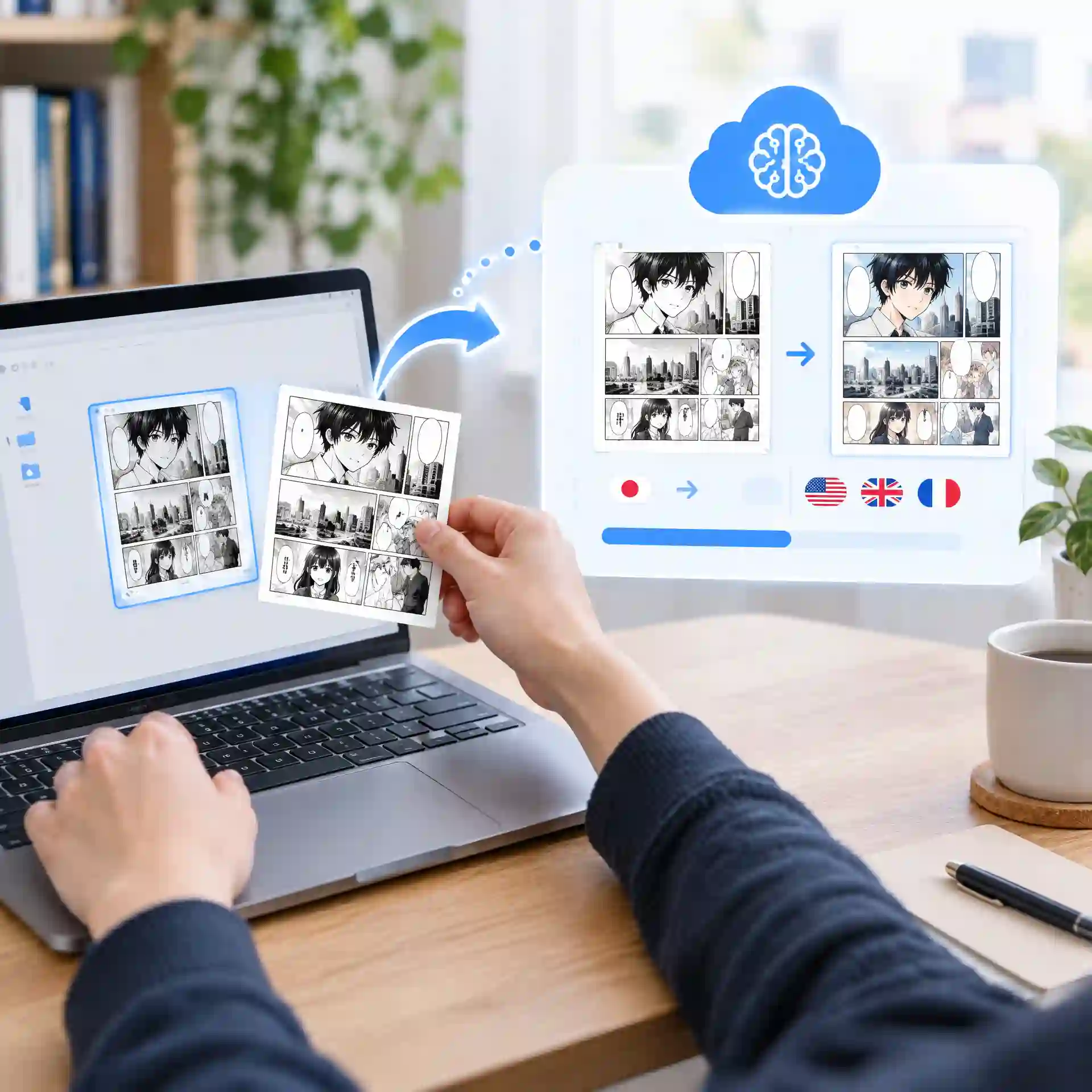
Visual text needs a different review loop. A lettering specialist can rebuild a bubble, match a type style, and decide whether a sound effect should be translated or preserved. For that focused task, panel font is a manga translator tool can be considered alongside the subtitle workflow. Treat its output as artwork to check in context, not as a replacement for timed captions.
A practical release checklist
Keep the video, artwork, and subtitle files versioned separately. Watch the localized cut with sound and pause on dense panels. Check that captions do not cover lettering, translated bubbles fit their shapes, and repeated terms stay consistent. This division prevents duplicated edits and shows which change belongs to the subtitle file or the image.